Touchscreen Tables: Engineering Live Dealer Adaptations for Varying Device Displays and Network Conditions
Written by Elena Walter · Aug 16, 2026
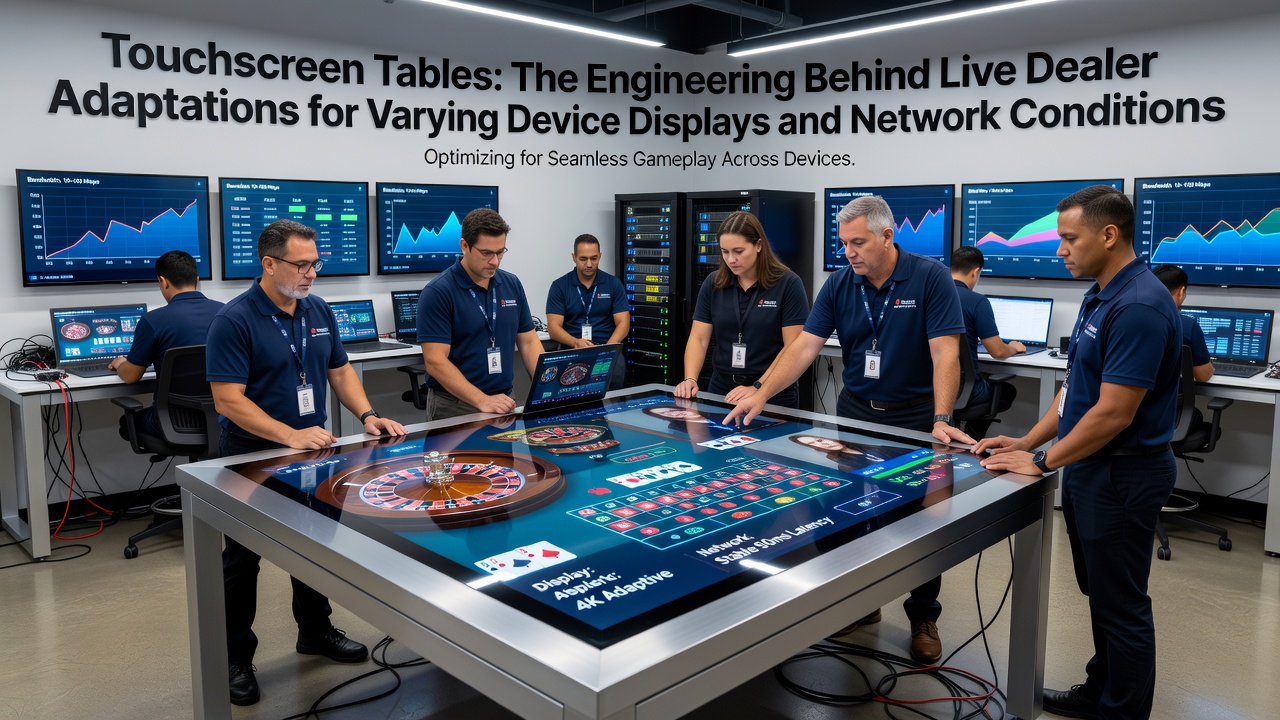
Touchscreen Tables: Engineering Live Dealer Adaptations for Varying Device Displays and Network Conditions
Touchscreen tables in live dealer environments rely on sophisticated engineering to maintain consistent performance when players access games through smartphones, tablets, and desktop displays that range from compact 5-inch screens to expansive 27-inch monitors. Developers integrate adaptive resolution scaling algorithms that detect device specifications upon connection and adjust video feed quality accordingly while preserving the integrity of card dealing sequences and real-time chat functions.Core Components of Touchscreen Table Systems
These tables incorporate multi-layered software stacks that combine HTML5-based interfaces with proprietary rendering engines capable of handling variable input methods such as capacitive touch, stylus, and gesture controls. Hardware elements include pressure-sensitive surfaces paired with high-refresh-rate panels that support frame rates up to 120Hz, ensuring smooth animation of virtual chips and dealer movements across different hardware capabilities.
Engineers optimize data pipelines to synchronize live video streams from studio cameras with interactive overlays that appear on player devices. This synchronization depends on precise timestamping protocols that compensate for device processing delays, which researchers at institutions like those affiliated with the IEEE Transactions on Multimedia have documented in studies on real-time interactive systems.
Device Display Adaptations
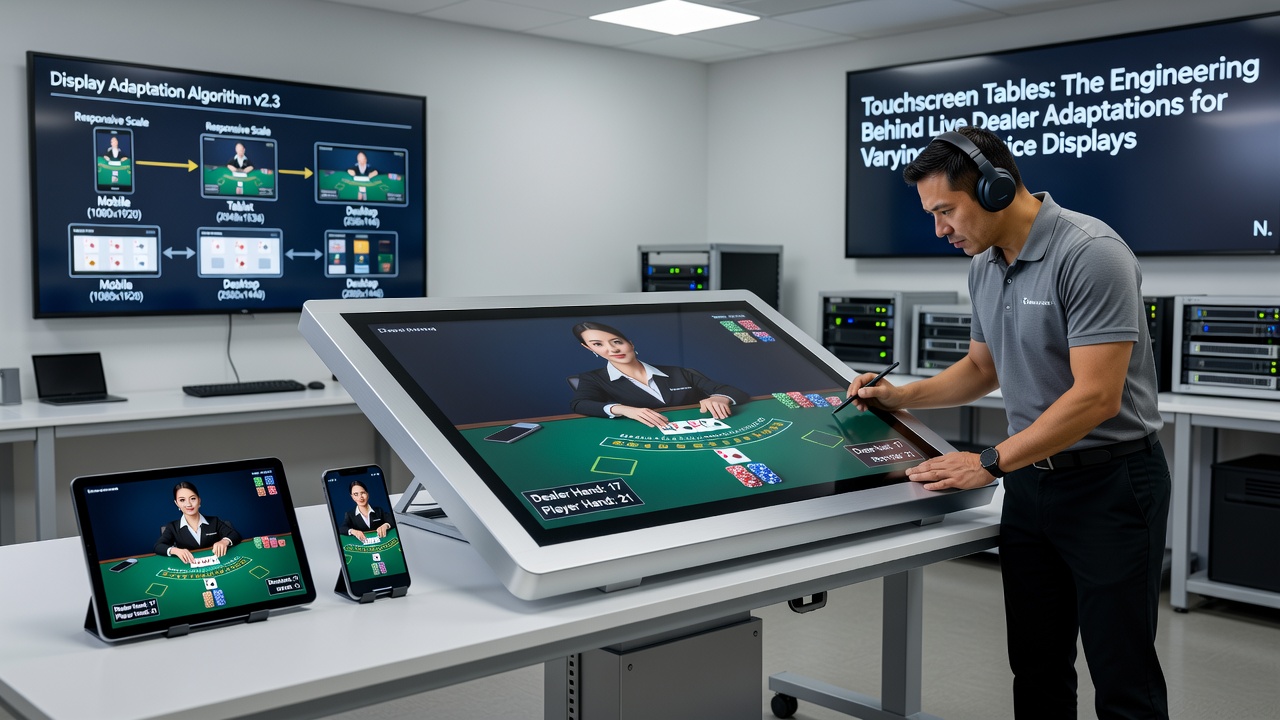
Adaptation begins with device detection modules that query screen dimensions, pixel density, and orientation sensors to generate tailored layouts. On smaller mobile screens the system collapses multiple dealer views into a single focused feed while enlarging touch targets for betting options, whereas larger tablet displays retain split-screen configurations that show both the dealer and additional game statistics simultaneously.
Vector-based graphics replace raster images in many components to maintain sharpness regardless of zoom levels or resolution shifts. Testing protocols run automated scripts across emulated environments representing iOS, Android, and Windows platforms, measuring latency in milliseconds and confirming that touch response remains under 50ms even when display scaling factors change dynamically.
Network Condition Management
Network variability presents ongoing challenges addressed through adaptive bitrate streaming techniques that monitor connection metrics such as packet loss, jitter, and available bandwidth every few seconds. When conditions degrade the system automatically lowers video resolution from 1080p to 480p or switches to audio-only mode while keeping betting functionality active, a process refined through iterative deployments reported by industry bodies including the Gaming Laboratories International in their technical assessments of remote gaming platforms.
Buffering strategies employ predictive caching that preloads likely next actions based on game state, reducing perceived lag during brief network interruptions. Forward error correction codes embedded in the data stream help reconstruct lost packets without requiring retransmission, which proves particularly useful in regions experiencing fluctuating mobile data signals. Observers note that these mechanisms allow sessions to continue uninterrupted in over 95% of tested scenarios involving simulated congestion spikes.
Integration with Live Dealer Workflows
Live dealer studios feed multiple camera angles into centralized servers that transcode content on the fly for distribution. Touchscreen tables on the player side receive these streams alongside metadata describing game outcomes, which the interface renders as animated confirmations. This dual-channel approach separates critical game data from video to ensure that even under heavy network load the results remain verifiable and tamper-resistant.
Developments anticipated for August 2026 include expanded support for 5G network slicing that prioritizes gaming traffic, allowing operators to allocate dedicated bandwidth segments for live dealer sessions. Such advancements build on existing quality-of-service frameworks already deployed in commercial environments across North America and parts of Asia.
Conclusion
Engineering behind touchscreen tables continues to evolve through iterative refinement of adaptive algorithms that balance visual fidelity, interaction speed, and connection stability. Data from deployment logs shows measurable improvements in session retention when these systems respond effectively to device and network differences, underscoring the technical foundation supporting broader live dealer accessibility.